The Teachers (School House)
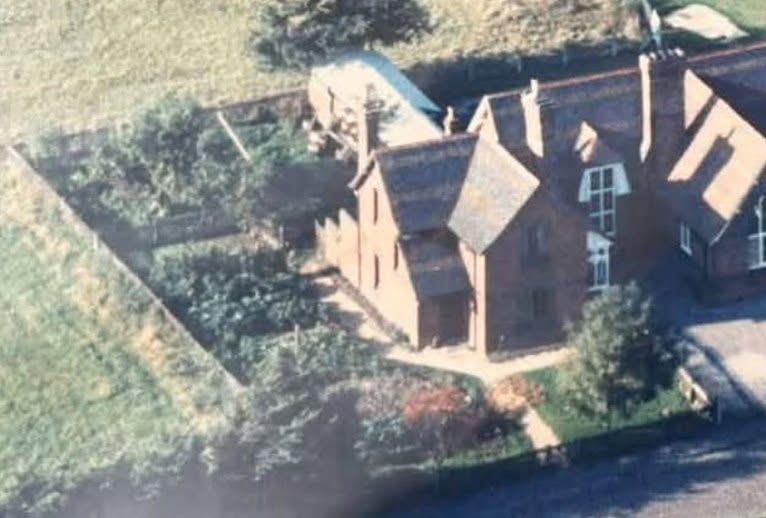
As Norton CofE School, next door, was built at the same time and as The Teachers housed the head teacher of the school until 1962 there will be many overlaps between the following account and that included under The Teachers.
The schoolhouse was completed in 1875 as part of the building of the new school so it can be assumed that any headteachers after this date through to the 1960s lived here. A report to the ‘Lords of the Committee of Council on Education’ now held at the National Archives dated 29 July 1871 includes precise dimensions for the rooms of the teacher’s residence (parlour, kitchen, scullery, bedrooms etc). Exact details concerning the construction methods for the walls, windows, roofs and floors and for the ventilation and an estimate for each building coming to a total of £860 was all provided by Waller & Sons who were eventually to conduct the project.
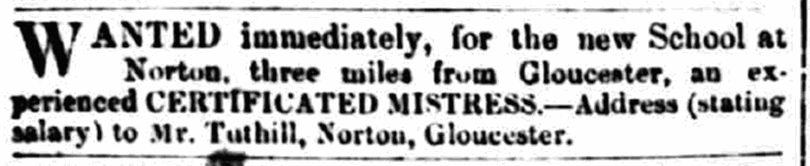
Gloucestershire Chronicle newspaper, 30 October 1875
At the opening of the school, Miss Elizabeth Bull, a certificated teacher was appointed head. She was paid just a very small salary with the occupation of the house and its garden compensating for this. Miss Bull has not been further identified. During her time at the school Miss Bull gets different reports. On 14 March 1877 the Rev Attwood wrote; “The new school, conducted in handsome buildings, has made a successful start. The order, though it is not perfect, is creditable to Miss Bull’s powers of discipline considering that the children were almost untutored before”.
In contrast to her earlier credit, on 11 Mar 1878, the new vicar, Rev Steele wrote; “Organization is defective, the Mistress apparently leaving the first standard and infants almost entirely to the pupil teacher. … The result of examinations show that the school has been allowed by Miss Bull to retrograde considerably”. On 27 June 1879 she recorded; “Gave up this school having had charge of it three years and six months”.
Henry Lucas Okey replaced Elizabeth Bull as head of the school, presumably came to live at the School House, and the school records from 7 July 1879 reported; “School reopened under new headmaster & mistress”. This also indicated that Mrs Okey also taught at the school. Henry was born at Islington, London in 1834, son of Samuel Okey, a custom house officer, and was still at Islington in 1851 when he’d taken employment as a solicitor’s clerk. In 1861 Henry was living at Finsbury, London, employed at a foreign goods warehouse. He is listed as being married to Bridget, however, Henry was living at Margaret Street, employed as a schoolmaster, when he finally married Bridget Mary Doyle, originally from Ireland, in December 1866 at Clerkenwell, Middlesex. In 1871 they were living at Ribbesford, Worcs, where Henry was a schoolmaster. Wife was sometimes called Mary and during their time at Norton she was selling chickens, presumably kept in the School House garden.

Gloucester Citizen, 10 October 1879
On 10 March 1880 the school records report; “Mr Okey, during the six months that he has been in charge, has considerably improved the work of the school”. During his time at Norton Henry also dabbled in potions for colouring hair, Mandalay, and a cure-all that he marketed by post as Okey’s Golden Remedy.
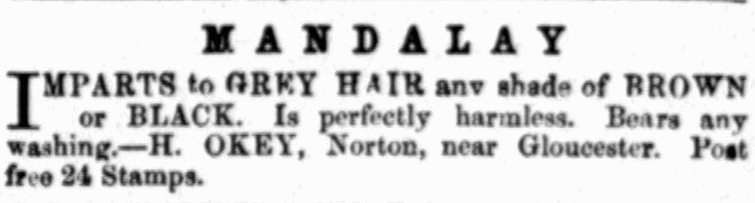
Cornish Times, 27 December 1879
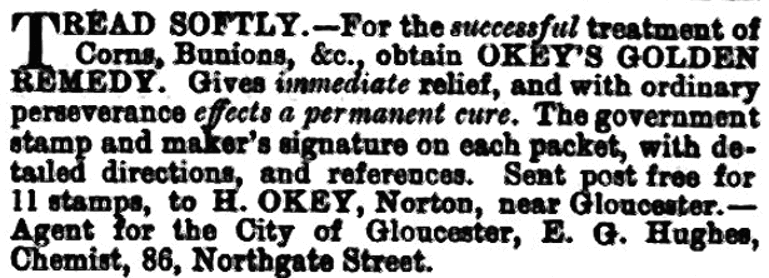
Cheltenham Mercury, 4 December 1880
On 26 January 1880, the Islington Gazette of London published the following; “The Nerves – Agra-Neura, or Nerve Water, does not merely numb the pain, but restores a healthy tone to the Nerves, thus preventing Headache, Neuralgia, and other Nerves pains; testimonials. Sent secure by post, 15 stamps, H Okey, Norton, near Gloucester”.
The first advertisement I have found locally appeared on 6 January 1881; “Tread Softly – A genuine remedy for corns, worts, or bunions, sent by return of post for 11 stamps – H Okey, Norton, near Gloucester. Immediate relief; rapidly cure. Agent for Gloucester; E G Hughes, Chemist, 86 Northgate Street. Agent for Cheltenham, Purnell, Chemist, 337 High Street”.
‘Tread Softly’ seems to have been Mr Okey’s slogan and heads most of his advertisements. On 15 January 1881 we find; “Tread Softly – Walking is healthful, but very unpleasant when you have a shooting corn for a companion. Okey’s Golden Remedy gives immediate relief and rapidly cures”. 26 January 1881 has Mr Okey expanding his powers; “Aqua-Neura – Gives almost instant relief and speedily cures neuralgia, rheumatism, face-ache, ear-ache, and other neuralgic pains”. On 12 February 1881; “Tread Softly – The Medicean Venus had no corns – Okey’s corn and bunion remedy gives immediate ease; and with ordinary perseverance will effect a cure. Price 11d”. I assume that his Medicean Venus was Aphrodite. On 26 February 1881 he returned to his other life saver; “Notice – Bonus et Salvus – The Neura Pills; the best remedy for headache, spasms, wind, bile, and other complaints arising from indigestion; one or two doses will prove the truth of this assertion. Sent anywhere for 10 stamps; 20 pills in each box”. Mr Okey is now bringing Latin into his advertising; ‘bonus et salvus’ roughly being ‘healthy and good for you’. With his advertisement of 16 March 1881 he also offers; “Private references given”. His potions must have been so popular that by later this year he is claiming that others are copying his ideas. 23 September 1881 sees; “Tread Softly – Persons purchasing Okey’s Golden Remedy for corns, warts, or bunions, should see that his signature is on the wrapper, as there are several spurious imitations”. The adverts continue throughout the remainder of the year; 23 November 1881; “Tread Softly – They who would thread the ‘giddy mazes of the dance’ should have no corns or bunions”. Added at the end; “Genuine”. 30 December 1881; “Tread Softly – The beauty of the foot is sadly marred by corns or bunions to say nothing of the pain. For immediate relief and rapid cure send at once for Okey’s remedy”.
Perhaps Henry Okey had taken his mind off his job at the school as the verdict of a Diocesan Inspection on 13 July 1881, was that; “I regret that I cannot report favourably of this school at present”.
The last advertisement I can find before Henry Okey disappears was from 7 January 1882; “Tread Softly – Persons need not suffer from corns or bunions if they will send for Okeys remedy and use it fairly”.
Henry was at Norton until February 1882 and I have found no more trace of him selling potions. In 1891 he was living with his wife at Haile, Cumberland, employed as an elementary teacher with wife, Bridget, also employed at the school as a sewing mistress. They must have moved again shortly afterwards as Henry was living at Monksilver, Somerset, employed as a schoolmaster, when he died in July 1985.
Henry Brew took over the position as head of the school on 28 February 1882, when he was described as being a certificated teacher (1st Class), but his arrival in the village was shortly followed by the death of his wife Mary Ann in April 1882. Henry Brew had been born on the Isle of Man in 1834, son of Robert, a barber, and Harriett Brew, and grew up with his parents at Steam Packets Quay, Onchan, IOM, before going into teaching. Henry was a schoolmaster at Ashperton, Hereford, when he married the widowed Mary Ann Jones in Worcester in September 1857 and in 1861 the couple were living at Newnham, Glos. In the late 1860s they were at Collingham, Notts, in 1871 at Hope, Derbys, and in 1881 at Leamington Priors, Warks.
At the inaugural meeting of the Loyal and Constitutional Association of Norton, held in the schoolroom on 1st July 1890, Henry Brew was elected as honorary secretary.
In 1891 Henry was a widower and school head at Norton with a 21 year old son, Nigel R, who was a teaching assistant, and 25 year old daughter Edith, their housekeeper.
In April 1891 the Brew family were selling a Herbert & Cooper bicycle, a splendid roadster with plated parts and apparently cheap at £3.
In May 1893 Nigel R Brew, ‘of Norton CofE School’ won the first prize of £3 3s, in a field of 113 competitors, in a hymn tune competition open to musical students.
In July 1894 the master of Norton School, still Henry Brew, was selling 2½ octave pedals for attaching to a piano.
Henry’s name came up at a Revision Court held on 10 September 1894 for ‘the revision of the voters’ lists for the Tewkesbury Division’; “The Liberals raised a question as to whether Mr Henry Brew, schoolmaster of Norton, should not be placed in Division 2 of the Register, instead of Division 1. Mr Docwra said the claimant was one of those who, whilst in the same occupation or service, had to live in the house attached to the school”. A discussion then followed as to whether or not Mr Brew had to live in the schoolhouse that was provided for him, or, if he chose, could he live elsewhere. In the end he was allowed to remain in Division 1 entitling him to vote in both Parish and District Council elections. Henry ceased to be head at the school when he retired in 1894.
In 1901 Henry was living at Ampthill, Beds, employed as Reader and Superintendent at John Cross’ Hospital, Little Park. Henry appears to have remarried Hannah Smith at Gloucester in 1903 and in 1911 was living with his wife, recorded as Esther, at Leonards Stanley, a retired schoolmaster. Henry’s daughter, Laura, had married Walter James in 1888 and they lived the remainder of her life at Mead Croft, Bishops Norton. Henry died on 24 February 1919 at Norton Green so perhaps was living with his daughter at the time.
The Brews are both buried besides the vestry window at St Mary’s, Norton, where they have a memorial; “Sacred to the memory of Mary Ann Brew who died April 17th 1882 aged 51. And of Henry Brew husband of the above who died February 24th 1919 aged 84. Peace perfect peace”.
Whilst I cant be certain, I believe this may be Henry Brew.
A Miss or Mrs E M Allen was next to hold the post as head teacher and may have lived here but remained in the job for less than a year and has not been positively identified either before, after or even in the school records during her time here. There is a reference from 1 March 1895 that may refer; “The present teacher has only been a short time in charge of the school which she found in a very backward condition”.
Next came Miss or Mrs M C J Palmer, who took over the school in July 1895 and she was here for only three years and also has not been positively identified either before, after or even in the school records during her time here.
In 1901 Arthur Browne and family were here. Arthur Anthony Browne was born in 1853 at Gloucester, son of Edwin, a butcher and later gardener, and Ann Browne. Arthur grew up at Barton, Gloucester, and initially took a trade as an apprentice carpenter before settling into a career as a saddler. In July 1881 Arthur married Eliza Victoria Florence Ford in at St James’, Gloucester. Known as Florence his wife was born in 1856 at Monkton Coombe, Somerset, daughter of William, a china and glass dealer, and Eliza Ford, and she grew up in Bath. By 1891 the couple were living with three young children at King Street, Gloucester, where Arthur was still a saddler but Florence had no employment. Arthur and Florence arrived in Norton in August 1898 when Arthur was still employed as a saddler and harness maker and Florence had become the schoolmistress. They had three children in residence, all born at Gloucester, including seventeen year old Lilian who was a school assistant. The school records report Florence’s arrival at the school on 2 August 1898; “I, Florence Browne, a trained certificated teacher, took charge of this school”. Florence appears to have trained in Cheltenham.
On 8 August 1899, Florence Browne’s daughter Lillian was briefly appointed to cover the absence of assistant teacher Ann Freeman.
On 9 March 1903 it was recorded that; “It is impossible for the mistress to teach the older children single handed and at the same time to supervise the work of the infants. Some addition to the teaching staff is needed” and the existing staff were confirmed as; “Mrs F Browne, certified teacher. Miss A Freeman, Ast68. Flossie Oakley, monitor”.
Throughout this time of ever changing staff Mrs Florence Browne continued as headmistress and is remembered; “I attended Norton School in 1910, the headmistress was Mrs Browne. I remember she would appear through a door from the school house into the classroom. She wore a full length black dress and a white starched pinafore with a frilled edge, she would tie this at the front with a bow and then pull the bow around to her back. Mrs Browne followed this routine every day. We were all taught together in the main classroom”. (Winifred Hipwood – aged 94).
The Browne family were still in the School House at Norton in 1911 at which time the house had five rooms. From the memories, noted a long time ago, of villagers who remembered Mrs Browne it can be gathered that she was by no means a firm favourite with her pupils. Through the end of 1913 Mrs Browne was absent from the school due to illness and was replaced as head by Olive Mary Hill, a Gloucester Supply Mistress, who never lived in the village. Mrs Browne resumed her duties at the school on 12 January 1914. “Mrs Browne resigned the headmistresship at Norton CofE School on April 30th in order to take up the position of headmistress in Oxfordshire” then “I resign charge of this school, Eliza V F Browne”. Florence left here for a school at Balscote, Oxon, and by 1921 both Arthur and Florence had retired. Florence died in 1925 at Shipston on Stour.
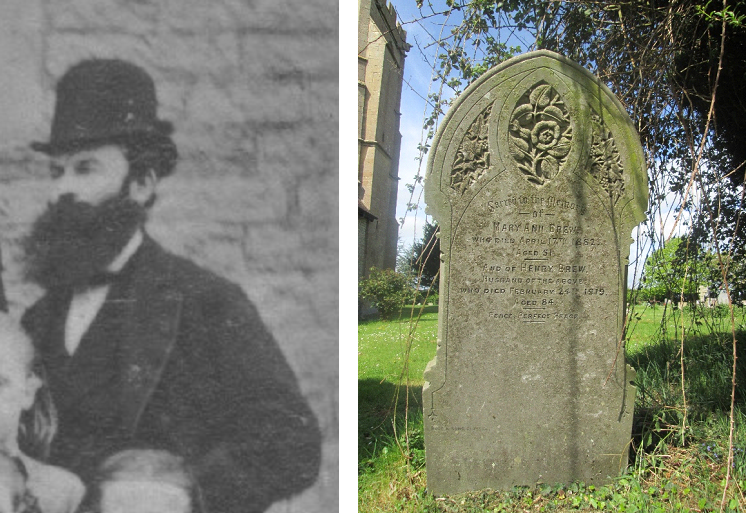 Whilst I cant be certain, I believe this may be Henry Brew.
The next identified resident of the School House was Gertrude Robinson who took on the position at the school in September 1915 arriving from Dollis Hill, London. On 13 September 1915, Elsa Margaret, daughter of Robert Robinson of the School House, was admitted to Norton School.
In the 1990s I spoke with a Mrs Riddick at Dursley. She had spent several years of her childhood living with her family at Church Farm and later Ivy House Farm. She remembered Mrs Robinson who was actually head from September 1915 to May 1918; “I remember that her husband worked in a bank in Gloucester and that she had two children; Elsa and Kathleen. Elsa died from Spanish flu and I believe that she was buried at Norton Church. She had very modern ideas and had taught in Canada for a time. She was one of the best teachers that I had”. Daughter Elsa left the school on 24 June 1918 but Mrs Robinson appears to have remained in post until 31 May 1919.
In May 1919 Mr C O J Perrett and family were here. Charles Oliver John Perrett was born in 1886 at Bridgwater, son of Charles, a fish and fruit dealer, and Hannah Perrett. He appears to have been known as Oliver as a child, perhaps to differentiate him from his father, and Charles in later life although Norton records more regularly refer to him simply as Mr Perrett.
In 1891 Oliver was staying with his paternal grandparents at Monmouth Street, Bridgwater, and in 1901 he was back with his parents at St Johns Street, Bridgwater, at which time his elder sister Mabel was employed as a school board teacher. In 1911, still known as Oliver, he was staying in the house of Joseph Barnett at Corporation Street, Stafford, where he too was then employed as a schoolmaster at a church school. Oliver married Catherine Annie Mould, known as ‘Cam’, at United Methodist Chapel, Stafford, in February 1915. They were to have two daughters, Maude and Norah, who along with his wife were all born in Staffordshire.
Marrying at a Methodist chapel is an indication of Oliver’s religious beliefs and when the First World War started in 1914 it must have given him much to think about as many Methodists became conscientious objectors, refusing to take up arms. Many of these objectors were imprisoned but there was an alternative. On 31 August 1916 Oliver was a schoolmaster living at Avon House, Butt Lane, Stoke on Trent, when he enrolled at Lichfield as Private, No 2641/29968, in the 5th Northern Company, Non-Combatants Corps, and was sent to serve at Rugeley. On enrolment Oliver stated his religion to be ‘free thinker’. Oliver appears to have completed his entire service in Staffordshire, was discharged on 19 December 1918, and became Headmaster at Norton CofE School in May 1919. In 1921 the School House was described as having six rooms and Oliver was recorded as the head schoolmaster, Norton CofE School, employed by Gloucestershire Education Committee.
In February1933 Mr Prosser gave a lantern lecture in the school room entitled ‘Somerset’, talking about his home county as a native of Bridgwater.
The Prosser family stayed at the School House until Oliver retired his position at the school at the end of 1946. Rev Evans Prosser once wrote about the first village hall at Norton; “The actual re-erection on the site began on January 1st 1947, the very day that Mr Perrett was moving out of the school house after his resignation”.
It is believed that the school garden was located at the school house when gardening classes commenced on 26 March 1925.
Oliver was active in many village activities during his time at Norton and appears to have been known as Boss Perrett by many of his former students. He was a founder member of the Parochial Church Council at St Mary’s in 1920. A parish magazine for Churchdown, Down Hatherley and Norton from October 1925 recorded; “We have heard of the success of Miss Nora Perrett in the recent examination for County Scholarships. We congratulate her, as well as her father. She has commenced her attendance at the Girls’ High School in Denmark Road”.
The couple were living at Ilminster when ‘Cam’ Perrett died ‘after a long illness patiently borne’ at a nursing home in Bridgwater in October 1947 and Mr Perrett died in 1953.
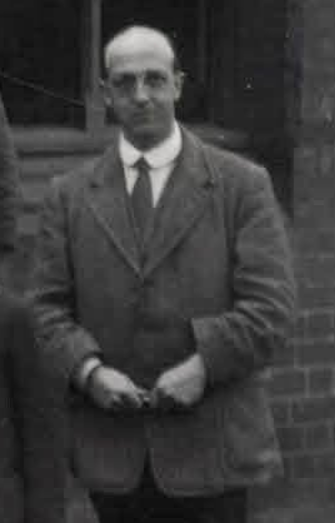
Charles Oliver John Perrett
In February 1947 the Morgan family were at the School House. Edgar L, wife Ethel, the school head, and son Griffiths A Morgan although Hannah Perrott was also still here as she was the following year before leaving.
In 1920, Edgar, Ethel, and two daughters were living at Rhyydings Park Road, Swansea. Rev Evans Prosser once wrote of Mrs Morgan; “In many ways she had a difficult task as the numbers fell eventually to as low as 15 or 18, which meant that for a long time she had no assistant at all and had to teach the children of all ages herself. I do not think that the parents always realised what a hard job this was. The reason for this low number of pupils was that for a long period in the fifties there were very few children in the village”. Incidentally, this was why for so long we had no choir in the church.
Mrs Morgan retired at the end of 1959 but the family were still living at the School House in 1962. In 1960 and 1966 the couple were also appearing on the electoral list living at Larkhay Road, Gloucester, which is presumably where they retired to.
“In the fifties the school attendance was down to sixteen children and the headmistress was Mrs Morgan (1947-1962). She was the last headmistress to live in the school house. At the time the school was very poorly served and there were many complaints about the standard of education. On one occasion I complained when my daughter came home with work written on brown paper which had been used on a previous occasion. Ultimately Mrs Morgan retired, the parents refusing to contribute to a farewell present. The school governors at the time collected among themselves and made a presentation on the occasion of her retirement”. [Denis Williams, 1999].
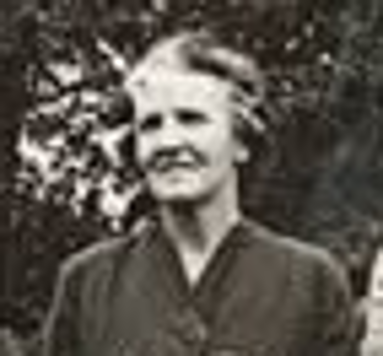
Mrs Morgan c1951
After 1962, the School House was let for some years and in 1963 Louis and Maud Gingell were here.
Louis Henry Gingell was born in 1896 at Bulley, Forest of Dean, son of John and Annie Jane Gingell, farmers at Tynans Farm. In 1911 Louis was living in the household of Sidney and Mercy Hayward where he was employed as a farm servant on their farm at Churcham. With the commencement of the First World War, Louis enlisted at Gloucester on 5 September 1914 as Driver, No 11642, in the 85th Brigade, Royal Regiment of Artillery, and was posted to Hilsea, Portsmouth. At the time of his enlistment Louis was 5ft 5¼ins tall, weighed 120lbs, had a 35½ins chest, a fresh complexion, grey eyes, auburn hair and a scar on his left hand. On 25 July 1915 was posted to France embarking at Southampton and disembarking at Le Havre the following day. On 2 September 1915 was given 2 days field punishment for committing a nuisance in the horse lines and on 21 January 1916 was punished 7 days for gambling. In February 1916 was serving with R Battery, 1/4 West Lanes (Howitzer) Brigade, Royal Field Artillery. In February 1917 was granted 10 days leave to return to the UK. Was promoted to Bombadier on 9 September 1917, Corporal on 9 June 1918, and Sergeant on 28 June 1918. On 16 August 1918 was gassed and admitted to hospital in France until being discharged on 6 September 1918. Was granted leave to return to the UK from Calais on 24 November 1918 to 8 December 1918 but this was extended to 15 December 1918. On 21 February 1919 was promoted to Acting Battery Sergeant Major. He embarked from Boulogne on 24 March 1919, was demobilised on 23 April 1919 and returned to his parents at Pigeon House Farm, Bulley. Louis was still farming at Bulley when he married Maud Elizabeth Bennett in October 1929 at Churcham, her home. Maud had been born at Churcham in 1905, daughter of Howard James and Maud M Bennett, farmers. In 1921 Maud had been living with her widowed mother at Churcham, where her 18 year old brother, Howard, had taken over the family farm.
Between approximately 1930 and 1958 the Gingells had been farming at Ivy House Farm and probably left the farm upon retirement. They must have wanted to rent a cottage to remain at Norton and in 1958 they were briefly at Mount Pleasant, Marlpit Lane, in 1959-62 at No 30 Wainlode Hill, then came to the School House. They were still here when Louis Gingell died in April 1967 and was buried at Norton. Maud left Norton for Victoria Court, Longford, where she died in January 1980.
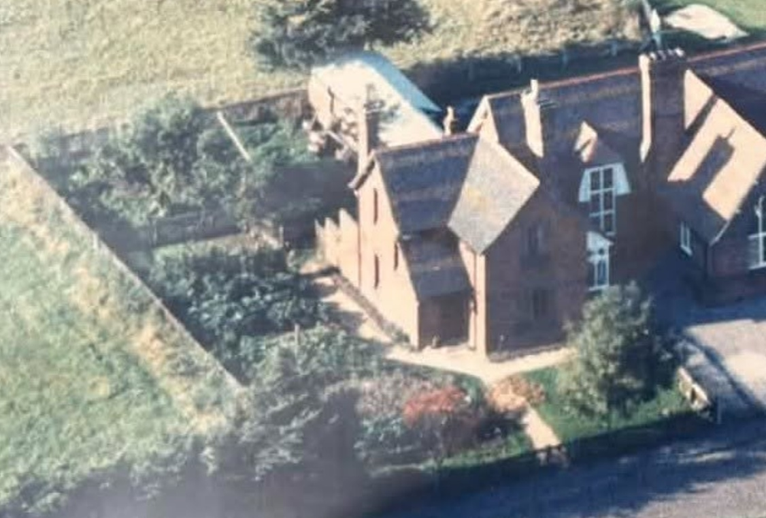
The School House, adjoining the end of Norton CofE School, 1965
From 1967 onwards the School House was deserted and little used for anything until, in 1974, when it was sold by the Church Commissioners and became a private dwelling in the ownership and occupation of Denis and Lily Williams.
“The school house adjoining the school is also dated 1876, brick built under a tiled roof, another wing having been added by myself in 1974 after its sale by the Church Commissioners at auction. Leading into the main room of the school from the yard of the house was a substantial door that must have been the one referred to by Mrs Winifred Hipwood. This doorway was bricked up soon after the sale. … Mr and Mrs Gingell, she had been housekeeper to the vicar, then occupied it. When they left the house was for time used as a school library it then fell into neglect and was left to deteriorate for a number of years”. [Denis Williams, 1999].
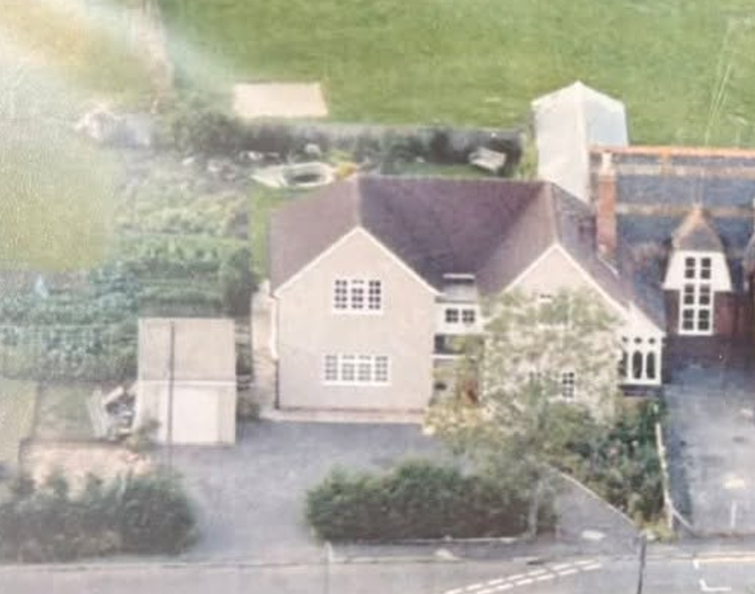
The School House, adjoining the end of Norton CofE School, 1979
Dennis and Lily Williams were to remain here into the 2020s significantly extending the house. It was the Williams’ that changed the name from the School House to The Teachers.
